1.8. 按键电子琴
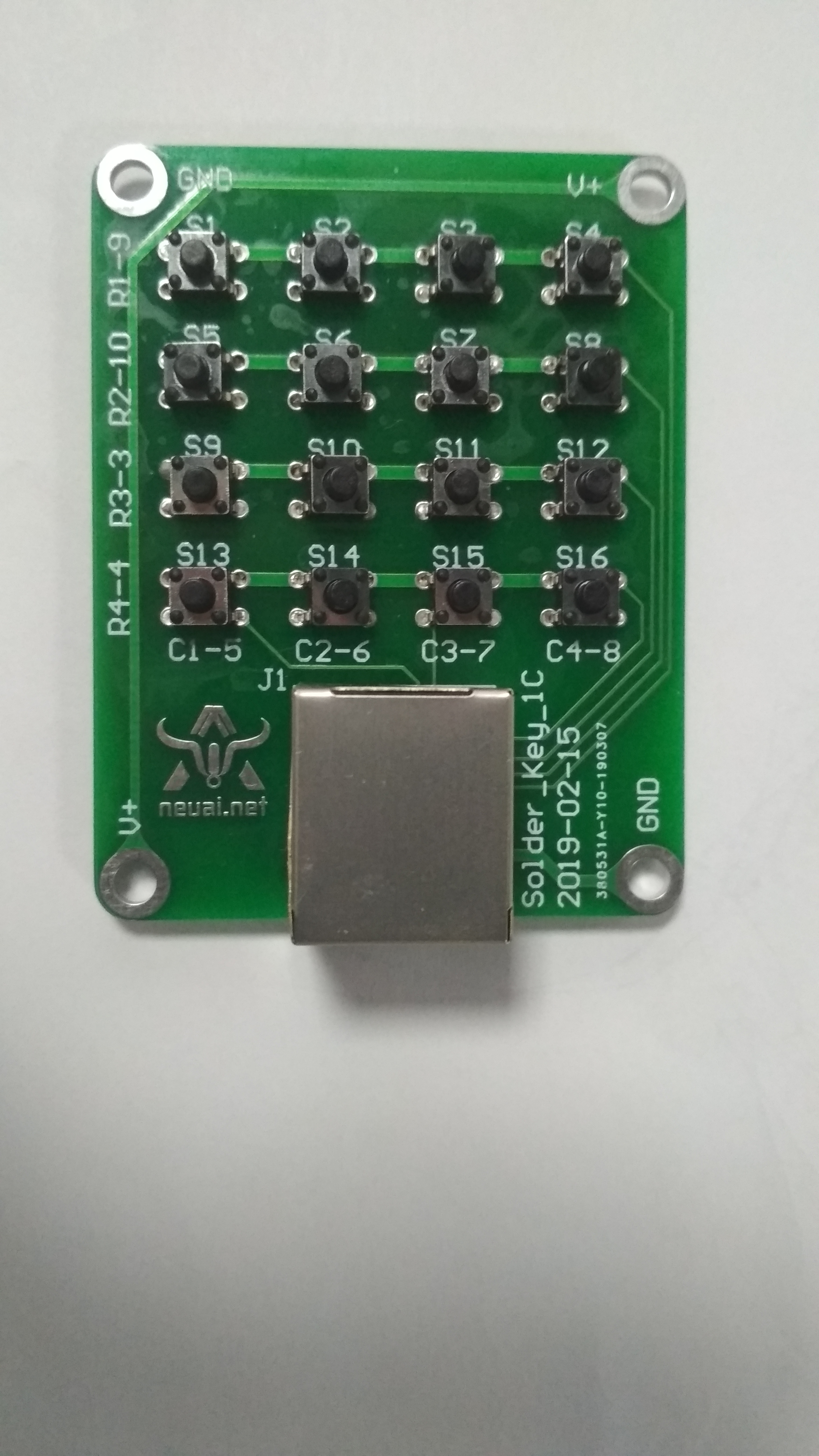
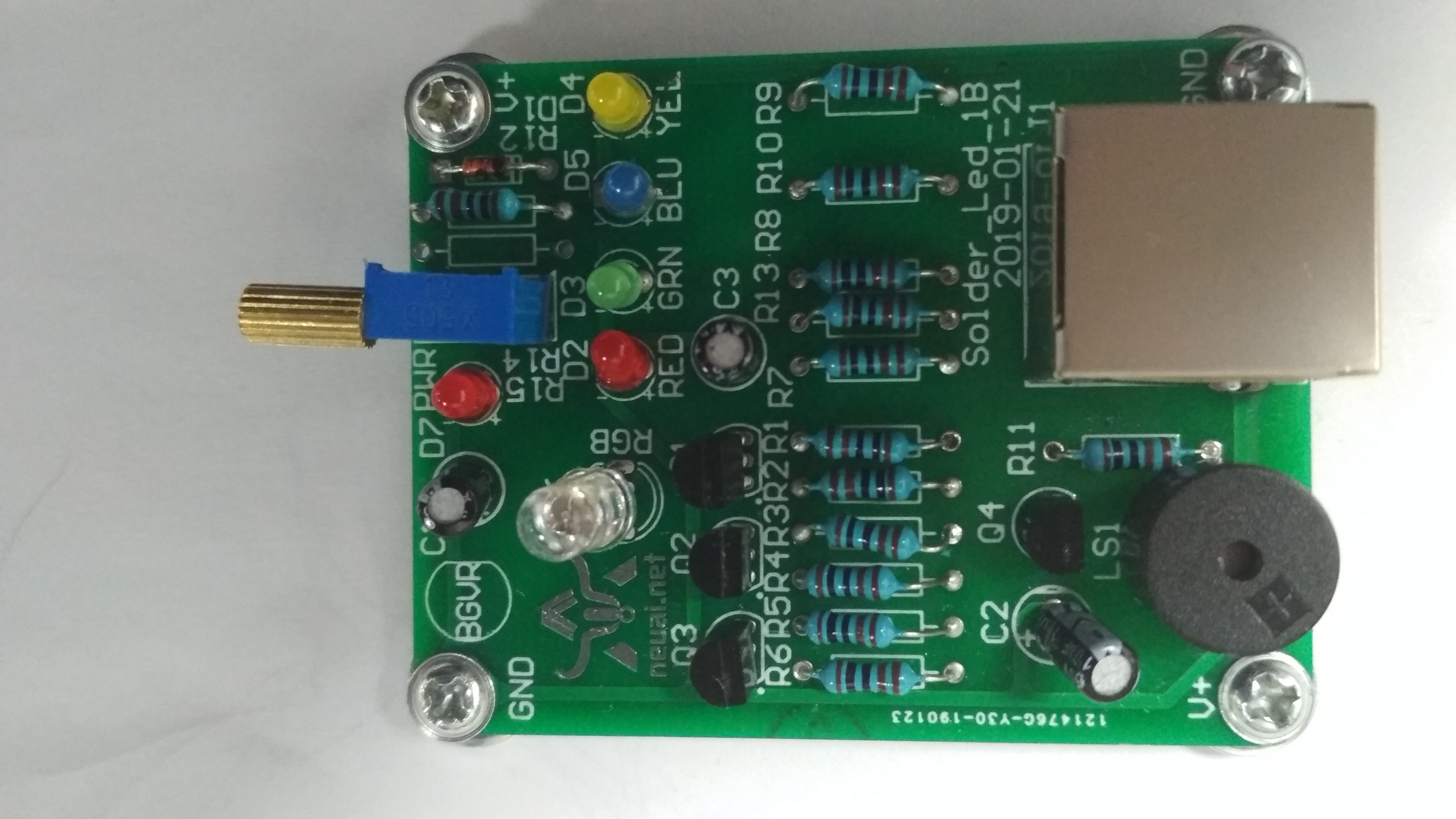
1.8.2. 编程学习
打开main.py文件开始编写代码: 导入Pin,Timer库:
from pyb import Pin,Timer
之后开始初始化引脚,代码为:
x1 = Pin('X3',Pin.OUT_PP)
R=[Pin('X9',Pin.OUT_PP),Pin('X10',Pin.OUT_PP),Pin('Y3',Pin.OUT_PP),Pin('Y4',Pin.OUT_PP)]
C=[Pin('Y5',Pin.IN,Pin.PULL_UP),Pin('Y6',Pin.IN,Pin.PULL_UP),Pin('Y7',Pin.IN,Pin.PULL_UP),Pin('Y8',Pin.IN,Pin.PULL_UP)]
i=0
j=0
k=0
首先使用Timer设定定时器,然后指定Timer的通道,并设定PWM模式、关联的Pin等参数,最后设置输出脉冲宽度或者脉冲宽度百分比(占空比)。通过设置不同的频率发出不同的声音。
tm3=Timer(2, freq=262)
buzzer=tm3.channel(3, Timer.PWM, pin=x1,pulse_width_percent=50)
完整代码如下:
while True:
        for i in range(0,4):#选行
                R[i].low()#将选中的行拉低
                for k in range(0,4):
                        if k!=i:
                                R[k].high()#将其他行拉高
                for j in range(0,4):
                        if i==0 and j==0 and C[j].value()==0:#选中第一行的第一个按键被按下
                                print('1')
                                tm3=Timer(2, freq=262)#蜂鸣器声音
                                buzzer=tm3.channel(3, Timer.PWM, pin=x1,pulse_width_percent=50)
                                pyb.delay(100)
                                buzzer.pulse_width_percent(0)
                        elif i==0 and j==1 and C[j].value()==0:#选中第一行的第二个按键被按下
                                print('2')
                                tm3=Timer(2, freq=294)
                                buzzer=tm3.channel(3, Timer.PWM, pin=x1,pulse_width_percent=50)
                                pyb.delay(100)
                                buzzer.pulse_width_percent(0)
                        elif i==0 and j==2 and C[j].value()==0:#选中第一行的第三个按键被按下
                                print('3')
                                tm3=Timer(2, freq=330)
                                buzzer=tm3.channel(3, Timer.PWM, pin=x1,pulse_width_percent=50)
                                pyb.delay(100)
                                buzzer.pulse_width_percent(0)
                        elif i==0 and j==3 and C[j].value()==0:#选中第一行的第四个按键被按下
                                print('4')
                                tm3=Timer(2, freq=349)
                                buzzer=tm3.channel(3, Timer.PWM, pin=x1,pulse_width_percent=50)
                                pyb.delay(100)
                                buzzer.pulse_width_percent(0)
                        elif i==1 and j==0 and C[j].value()==0:#选中第二行的第一个按键被按下
                                print('5')
                                tm3=Timer(2, freq=392)
                                buzzer=tm3.channel(3, Timer.PWM, pin=x1,pulse_width_percent=50)
                                pyb.delay(100)
                                buzzer.pulse_width_percent(0)
                        elif i==1 and j==1 and C[j].value()==0:#选中第二行的第二个按键被按下
                                print('6')
                                tm3=Timer(2, freq=440)
                                buzzer=tm3.channel(3, Timer.PWM, pin=x1,pulse_width_percent=50)
                                pyb.delay(100)
                                buzzer.pulse_width_percent(0)
                        elif i==1 and j==2 and C[j].value()==0:#选中第二行的第三个按键被按下
                                print('7')
                                tm3=Timer(2, freq=494)
                                buzzer=tm3.channel(3, Timer.PWM, pin=x1,pulse_width_percent=50)
                                pyb.delay(100)
                                buzzer.pulse_width_percent(0)
                        elif i==1 and j==3 and C[j].value()==0:#选中第二行的第四个按键被按下
                                print('8')
                                tm3=Timer(2, freq=523)
                                buzzer=tm3.channel(3, Timer.PWM, pin=x1,pulse_width_percent=50)
                                pyb.delay(100)
                                buzzer.pulse_width_percent(0)
                        elif i==2 and j==0 and C[j].value()==0:#选中第三行的第一个按键被按下
                                print('9')
                                tm3=Timer(2, freq=587)
                                buzzer=tm3.channel(3, Timer.PWM, pin=x1,pulse_width_percent=50)
                                pyb.delay(100)
                                buzzer.pulse_width_percent(0)
                        elif i==2 and j==1 and C[j].value()==0:#选中第三行的第二个按键被按下
                                print('10')
                                tm3=Timer(2, freq=659)
                                buzzer=tm3.channel(3, Timer.PWM, pin=x1,pulse_width_percent=50)
                                pyb.delay(100)
                                buzzer.pulse_width_percent(0)
                        elif i==2 and j==2 and C[j].value()==0:#选中第三行的第三个按键被按下
                                print('11')
                                tm3=Timer(2, freq=698)
                                buzzer=tm3.channel(3, Timer.PWM, pin=x1,pulse_width_percent=50)
                                pyb.delay(100)
                                buzzer.pulse_width_percent(0)
                        elif i==2 and j==3 and C[j].value()==0:#选中第三行的第四个按键被按下
                                print('12')
                                tm3=Timer(2, freq=784)
                                buzzer=tm3.channel(3, Timer.PWM, pin=x1,pulse_width_percent=50)
                                pyb.delay(100)
                                buzzer.pulse_width_percent(0)
                        elif i==3 and j==0 and C[j].value()==0:#选中第四行的第一个按键被按下
                                print('13')
                                tm3=Timer(2, freq=880)
                                buzzer=tm3.channel(3, Timer.PWM, pin=x1,pulse_width_percent=50)
                                pyb.delay(100)
                                buzzer.pulse_width_percent(0)
                        elif i==3 and j==1 and C[j].value()==0:#选中第四行的第二个按键被按下
                                print('14')
                                tm3=Timer(2, freq=988)
                                buzzer=tm3.channel(3, Timer.PWM, pin=x1,pulse_width_percent=50)
                                pyb.delay(100)
                                buzzer.pulse_width_percent(0)
                        elif i==3 and j==2 and C[j].value()==0:#选中第四行的第三个按键被按下
                                print('15')
                                tm3=Timer(2, freq=1047)
                                buzzer=tm3.channel(3, Timer.PWM, pin=x1,pulse_width_percent=50)
                                pyb.delay(100)
                                buzzer.pulse_width_percent(0)
                        elif i==3 and j==3 and C[j].value()==0:#选中第四行的第四个按键被按下
                                print('16')
                                tm3=Timer(2, freq=1175)
                                buzzer=tm3.channel(3, Timer.PWM, pin=x1,pulse_width_percent=50)
                                pyb.delay(100)
                                buzzer.pulse_width_percent(0)